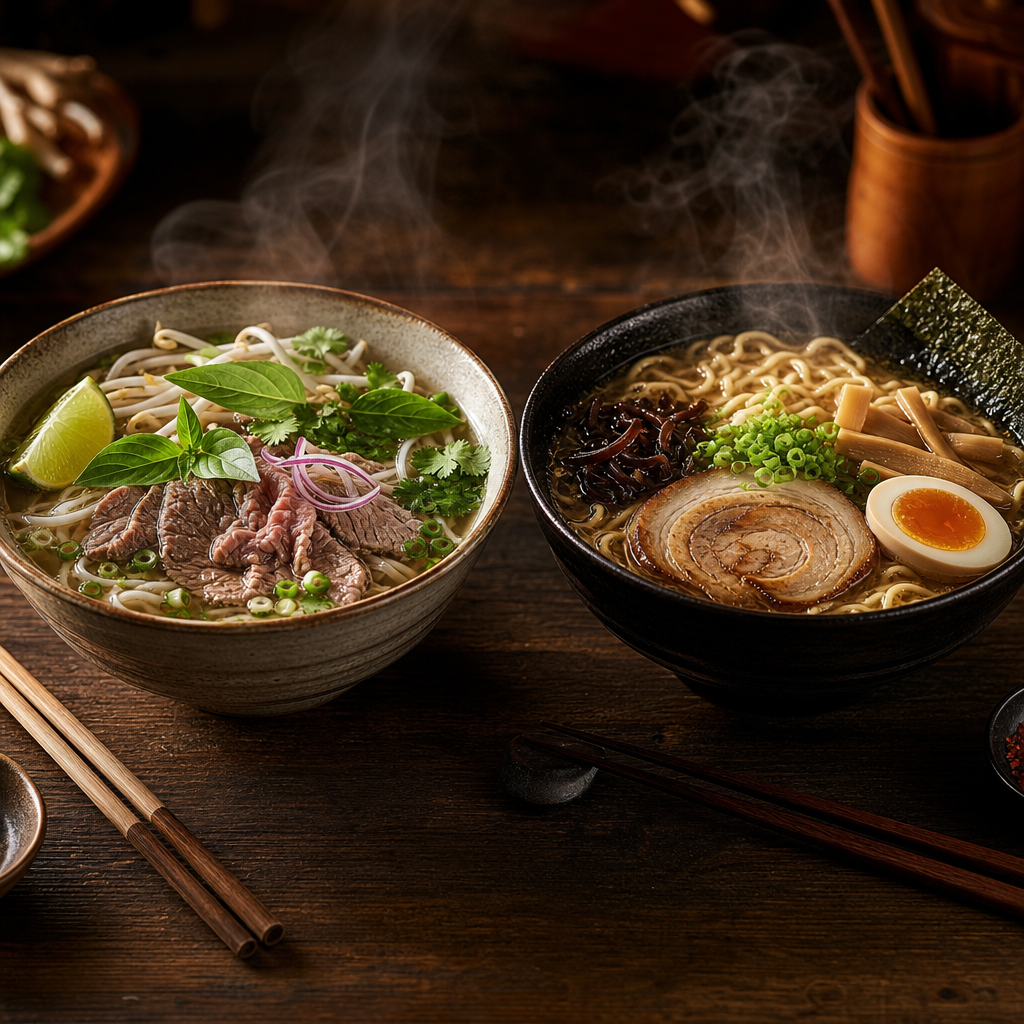
Short answer: Pho is far easier to eat halal than ramen. Traditional ramen is built on pork — pork-bone tonkotsu broth, chashu pork topping, and mirin or sake in the tare seasoning. Traditional pho contains no pork and no added alcohol; its halal status depends only on whether the beef or chicken is zabiha-sourced. Neither dish is automatically halal, but pho has one question to answer where ramen has four.
Noodle soup is comfort food across cultures, and Ottawa diners increasingly choose between the Japanese and Vietnamese schools. For a halal-observant diner, though, the two bowls sit at opposite ends of the difficulty scale. Here is the honest comparison.
The quick verdict
If you take one thing from this article: pho is the halal-friendly noodle soup; ramen is the difficult one. Ramen's problems are baked into the recipe — pork broth, pork toppings, rice wine in the seasoning — so making it halal means rebuilding the dish. Pho's only problem is sourcing: swap in zabiha-verified beef or chicken and the traditional recipe is already compliant. That's why halal-friendly pho exists in Ottawa today and verified halal ramen doesn't.
What's in ramen — and why it's a halal minefield
A classic bowl of ramen stacks four components, and each one raises a halal question:
- The broth. The most popular style, tonkotsu, is literally pork-bone broth simmered until creamy. Even chicken (tori paitan) and seafood broths are often fortified with pork fat or run in pots alongside pork stock.
- The tare. The concentrated seasoning at the bottom of the bowl almost always contains mirin, sake or both — deliberate rice-wine additions, not fermentation traces.
- The toppings. Chashu (braised pork belly) is the default protein, and it's typically braised in a soy-sake-mirin liquid. Even the marinated egg is usually steeped in the same mixture.
- The noodles. Ramen noodles themselves are wheat, water and alkaline salts — halal by composition, the one easy component.
None of this makes halal ramen impossible — dedicated halal ramen shops exist in Tokyo and London — but it means an ordinary ramen restaurant would need to rework its entire kitchen, not swap one ingredient. The alcohol question alone is structural: mirin sits in the tare, the chashu braise and the egg marinade, a pattern we unpacked in our guide to whether sushi is halal, where the same Japanese pantry issues apply.
What's in pho — and why it's the easier bowl
Pho's construction is radically simpler from a halal standpoint:
- The broth is beef or chicken bones with charred onion, ginger, star anise, cinnamon and fish sauce. No pork by tradition, no wine — flavour comes from roasting and time, not alcohol. (Fish sauce is considered halal by mainstream scholarship — see our fish sauce explainer.)
- The toppings are sliced beef or chicken, plus plant-based garnishes: basil, sprouts, lime, chili.
- The noodles are rice flour and water — halal by composition.
So the entire halal question collapses to one point: is the meat — both the slices on top and the bones in the pot — zabiha-sourced? That's a supply-chain question, not a recipe question, and it's why a Vietnamese kitchen can go halal-friendly without changing what it cooks. Our full breakdown is in Is Pho Halal?.
Pho vs. ramen: the halal comparison table
| Factor | Ramen | Pho |
|---|---|---|
| Pork in the traditional recipe | Yes — tonkotsu broth, chashu topping | No — strictly beef or chicken |
| Added alcohol | Yes — mirin/sake in tare, braises, marinades | No — traditional broth uses no wine |
| Noodles | Wheat — halal by composition | Rice — halal by composition |
| What must change for halal | Broth base, tare, toppings, marinades | Meat and bone sourcing only |
| Verified options in Ottawa | None in our directory to date | Yes — halal-friendly Vietnamese in the ByWard Market |
Is halal ramen possible?
Yes in principle — a halal ramen bowl uses chicken or beef broth from zabiha sources, alcohol-free tare, and halal proteins. Cities with large Muslim communities support dedicated halal ramen shops. In Ottawa, we have not yet verified one: no ramen restaurant in our directory currently communicates halal sourcing. If that changes, our listings will reflect it — we document exactly how claims are checked in our editorial standards, and we don't list what we can't source.
Until then, diners craving a deep, slow-simmered noodle soup have a real alternative: the same low-and-slow broth craft exists in Vietnamese kitchens, and Ottawa's verified option is the halal-friendly pho restaurant in the ByWard Market, where the stockpot runs all day the same way a ramen shop's does.
Finding a verified halal-friendly bowl
Ottawa's halal Vietnamese anchor is Pho By Night — our directory listing documents its halal-friendly status, address and hours, and our halal pho in Ottawa article covers what to order once you're there. First-timers usually start with pho bo; the loaded house bowls and the lemongrass beef bánh mì are the other signatures on the menu of halal-friendly Vietnamese soups and sandwiches.
The bottom line: both soups reward obsession, but they are not equal for a halal diner. Ramen requires a kitchen rebuilt from the broth up; pho only requires honest sourcing. Until Ottawa gets verified halal ramen, the rice-noodle bowl is the one you can actually eat with confidence — verified, documented, and worth the trip to the Market.