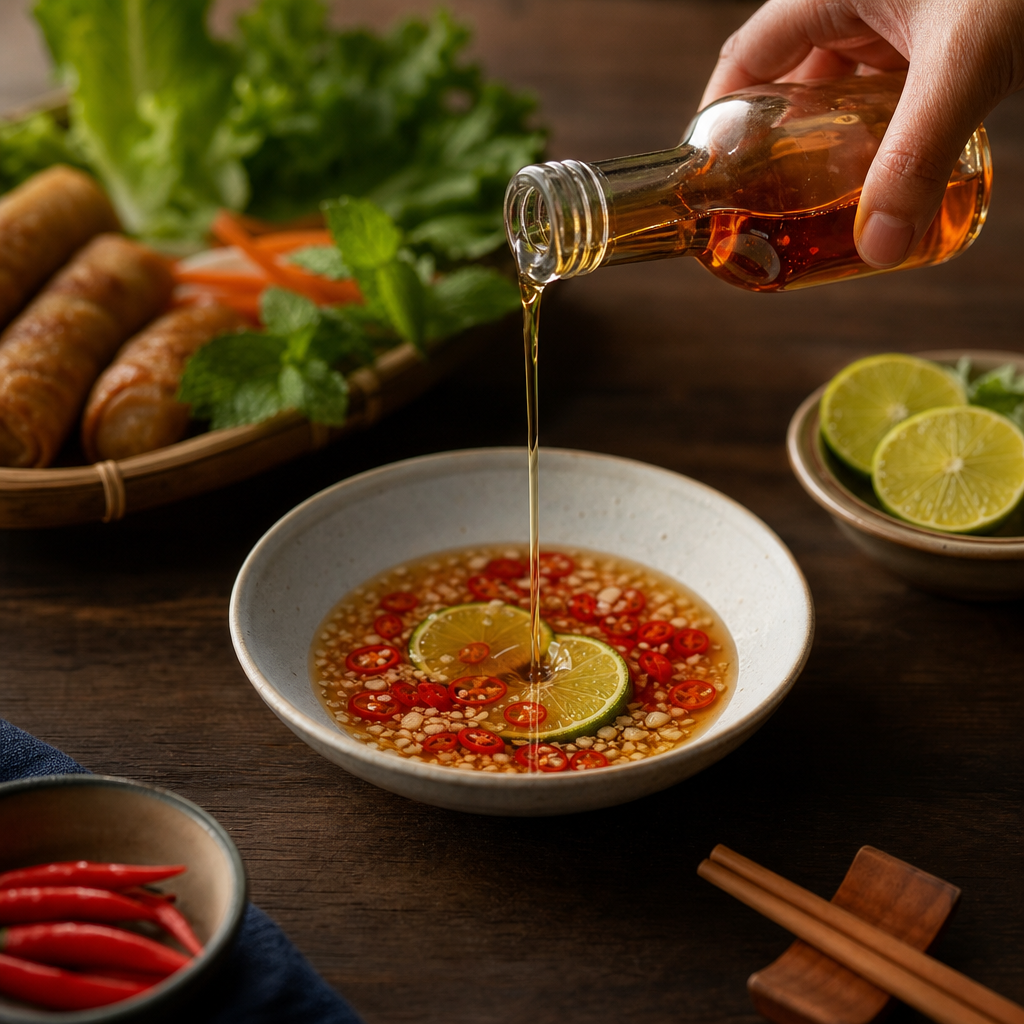
Short answer: Yes — the mainstream scholarly position is that fish sauce is halal. It is a fermented fish product, not an alcoholic beverage: the trace ethanol produced during fermentation is a natural by-product, present in amounts that cannot intoxicate, similar to what occurs in vinegar, ripe fruit and bread. Diners following stricter opinions may still prefer to ask how a dish is seasoned.
Few single ingredients matter more to halal diners exploring Southeast Asian food. Fish sauce — nuoc mam in Vietnamese — is the backbone of the cuisine: it seasons pho broth, dresses vermicelli bowls, and forms the base of nuoc cham, the dipping sauce that touches half the menu. If fish sauce were haram, most of Vietnamese cooking would be off the table. So it's worth understanding exactly what it is and why the permissibility question comes up at all.
Is fish sauce halal?
According to the position held by most contemporary scholars and major certification bodies, fish sauce is permissible. The reasoning rests on three points:
- Fish is halal. Seafood is broadly permissible in mainstream Islamic scholarship, and fish sauce contains only fish and salt.
- It is not khamr. The prohibition targets intoxicating beverages and intoxication itself. Fish sauce is a condiment that cannot intoxicate in any consumable quantity.
- Trace fermentation ethanol is ubiquitous. The minute ethanol traces in fermented condiments also occur naturally in bread, ripe bananas, yogurt and fruit juice — foods universally accepted as halal.
A minority of stricter opinions avoid any ingredient where fermentation-derived ethanol is detectable. That is a legitimate personal standard — but it is the exception, not the default position.
What is fish sauce made of?
Traditional fish sauce has exactly two ingredients: anchovies and sea salt. The fish are layered with salt in barrels and left to ferment for twelve to eighteen months. Enzymes break the fish down into a clear amber liquid that is drained, filtered and bottled. No alcohol is added at any stage; nothing pork-derived is involved. Some commercial brands add sugar or hydrolysed protein — worth a label check, but these additions don't change the halal analysis.
Does fish sauce contain alcohol?
No alcohol is added to fish sauce, and it is not an alcoholic product. Like every fermented food, it can contain trace ethanol measured in fractions of a percent — comparable to the levels found in fruit juice or sandwich bread. This is chemically unavoidable in fermentation and is precisely why scholars distinguish between khamr (intoxicants consumed for their effect) and foods where negligible ethanol occurs naturally. You cannot become intoxicated by fish sauce; you would be physically unable to consume enough.
Contrast this with mirin and sake — actual rice wines used in Japanese cooking, which we covered in our guide to whether sushi is halal. Those are deliberate alcohol additions and raise a genuinely different question than fish sauce does.
What do Islamic scholars say about fermented foods?
The broadly accepted framework works like this:
| Category | Examples | Mainstream position |
|---|---|---|
| Intoxicating beverages | Wine, beer, sake, mirin | Haram, including in cooking |
| Vinegars | Rice vinegar, apple cider vinegar | Halal — transformation (istihala) into a new substance |
| Naturally fermented foods | Fish sauce, soy sauce (naturally brewed), yogurt, bread, kimchi | Halal — trace ethanol is incidental, not intoxicating |
| Alcohol-added condiments | Sauces with added wine or spirit | Avoided by most; opinions vary on cooked-off alcohol |
Fish sauce sits firmly in the third row. If you accept bread and vinegar, the same logic covers nuoc mam.
Which Vietnamese dishes use fish sauce?
Nearly all of them — which is exactly why this question matters for anyone exploring halal Vietnamese food:
- Pho broth is seasoned with fish sauce alongside charred onion, ginger and spices — the full picture is in our is pho halal guide.
- Nuoc cham — the sweet-sour dipping sauce for spring rolls and vermicelli — is fish sauce, lime, sugar, garlic and chili.
- Bun bowls and rice plates are dressed or marinated with it.
- Banh mi fillings are often seasoned with it.
In Ottawa, the practical way to enjoy all of this with verified halal meat sourcing is the ByWard Market's halal-friendly Vietnamese restaurant — the anchor of the city's halal Vietnamese scene, whose sourcing and status are documented in our directory listing.
When should you ask about fish sauce?
For most halal diners: never — the mainstream position makes it a non-issue. Ask in two situations:
- You follow a stricter standard that avoids all detectable fermentation ethanol. Then ask whether a dish can be prepared without fish sauce — most kitchens can adapt dipping sauces, though pho broth cannot be unseasoned per-bowl.
- You suspect the sauce isn't the traditional product — some fusion kitchens blend fish sauce with rice wine in house sauces. "Is there any added wine or mirin in this?" resolves it.
Remember the hierarchy of halal concerns in Vietnamese food: the meat and the broth carry the real weight, fish sauce is a footnote. A menu built on verified halal beef and chicken — like the pho, vermicelli and bánh mì menu in the ByWard Market — has already answered the hard questions. As always, and per our editorial standards, verify directly with any restaurant if your requirements are strict.