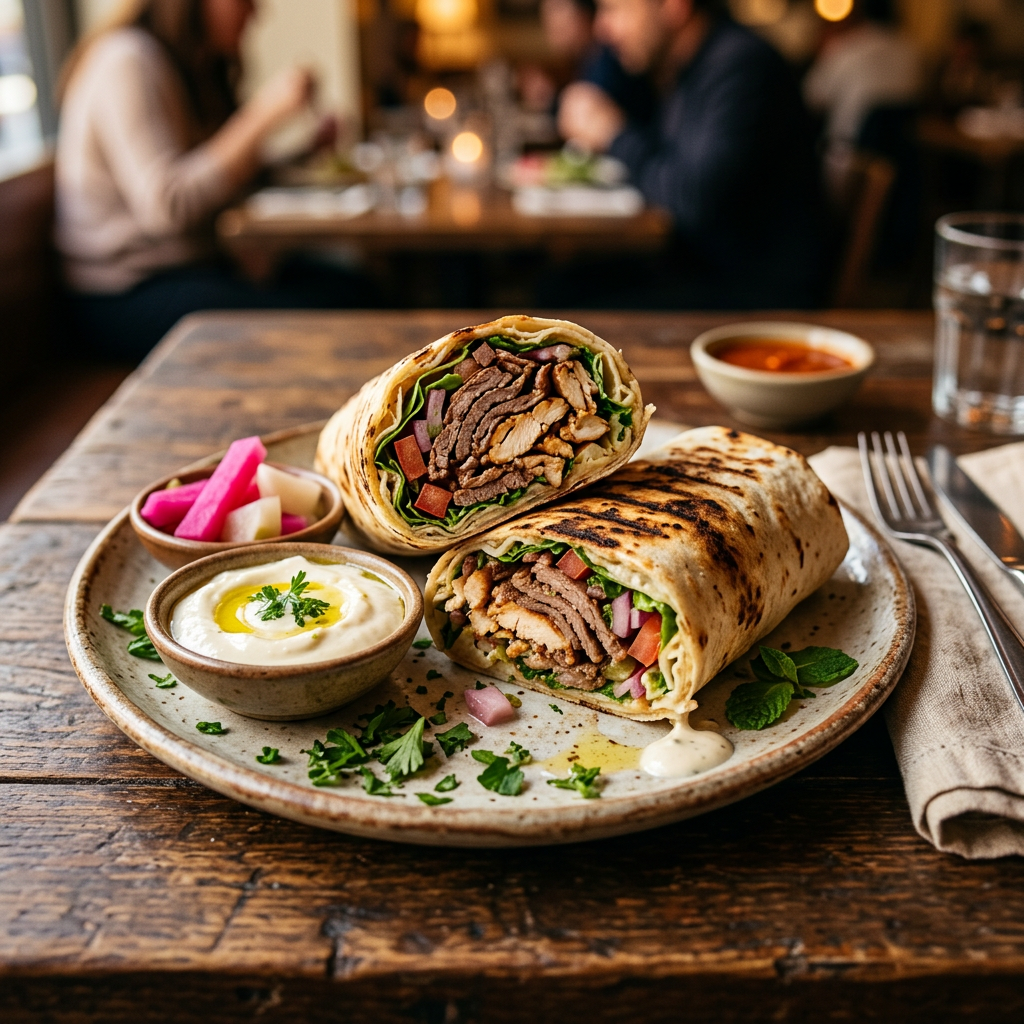
Short answer: Shawarma is halal only when the beef, chicken or lamb on the spit comes from halal-slaughtered animals and the kitchen avoids haram ingredients and cross-contamination. The dish has deep roots in Middle Eastern Muslim food culture, so halal shawarma is very common — but "shawarma" is a cooking method, not a certification, and non-halal shawarma absolutely exists. The same verify-before-you-order logic applies across cuisines, from shawarma spits to the halal-friendly Vietnamese menus that have joined Ottawa's halal scene.
This is one of the most-asked halal questions we see, and the confusion is understandable: shawarma feels halal in a way sushi or pho doesn't. This guide explains what the dish is, why its origins don't guarantee anything, which components carry real risk, and the exact questions to ask before you order.
Is shawarma halal?
Shawarma is conditionally halal. Nothing in the traditional recipe is haram — marinated beef, chicken or lamb, stacked on a vertical rotisserie, shaved into bread with garlic sauce, pickles and vegetables. Whether a specific wrap is halal comes down to three things:
- The meat: it must come from animals slaughtered according to Islamic requirements (zabiha). This is the decisive factor.
- The marinade and sauces: no wine, alcohol-based flavourings, or animal-derived additives from non-halal sources.
- The kitchen: no cross-contamination with non-halal items — relevant mainly in food courts and mixed-menu restaurants.
In cities with large Muslim communities, most dedicated shawarma shops do source halal meat — many are Muslim-owned and say so prominently. But in airports, food courts, and chains outside those communities, shawarma is frequently made from conventional commodity meat. The dish's cultural origin is a reason to ask hopefully, not a reason to skip asking.
What is shawarma made of?
A typical shawarma has four components, each with its own halal profile:
| Component | Typical ingredients | Halal risk |
|---|---|---|
| The meat | Marinated beef, chicken or lamb, stacked and roasted on a vertical spit | High — halal only if zabiha-sourced |
| The marinade | Yogurt or oil base with garlic, lemon, vinegar and spices (cumin, coriander, turmeric, cardamom) | Low — traditional marinades are alcohol-free; ask if wine or beer marinades are used in fusion kitchens |
| The bread | Pita or laffa flatbread | Low — typically flour, water, yeast, salt |
| Sauces and toppings | Toum (garlic sauce), tahini, hummus, pickled turnips, vegetables | Low — nearly all plant-based (see below) |
The pattern mirrors what we found in our guide to whether pho is halal: the risk concentrates almost entirely in the meat sourcing. Everything else in a traditional shawarma is low-concern.
Why shawarma isn't automatically halal
Three reasons the "it's Middle Eastern, so it must be halal" assumption fails:
- Shawarma is a technique, not a supply chain. Anyone can stack conventional meat on a rotisserie. The word tells you how the meat is cooked, not where it came from.
- Commercial shawarma cones are often pre-made. Many shops buy frozen, pre-stacked cones from food distributors. Some suppliers are halal-certified; others are not. The shop owner's heritage tells you nothing about which distributor they use.
- Not every Middle Eastern restaurant is halal. Lebanese, Syrian and Turkish cuisines are cooked by communities of many faiths, and plenty of restaurants serving excellent shawarma make no halal claim at all — some also serve alcohol or pork-adjacent menu items.
The practical takeaway: treat an explicit halal claim — on the menu, the window, or the website — as the starting point, then verify the details if your standard is strict. Our guide on how to ask a restaurant about halal status covers the exact wording that gets useful answers.
Is chicken shawarma halal? Beef? Lamb?
The rule is identical for every protein: the animal must be halal-slaughtered. That said, there are practical differences worth knowing:
- Chicken shawarma is the easiest for shops to source halal — zabiha chicken is widely available in Canada, and many shops that can't justify halal beef costs still run halal chicken.
- Beef shawarma often comes blended with lamb or beef fat for moisture. Every component of the blend must be halal, including added fat.
- Mixed cones (beef-and-lamb) are common; ask about both meats, not just one.
Important: a shop can be halal on chicken but not beef, or vice versa, depending on suppliers. If the menu says "halal chicken" specifically, don't assume the beef spit matches. For the background on what zabiha slaughter actually requires, see our zabihah explainer and the comparison in halal vs. non-halal meat.
Are the sauces and sides halal?
Good news: the classic shawarma accompaniments are almost entirely plant-based.
- Toum (garlic sauce): garlic, oil, lemon, salt — halal by composition. Some shops make a yogurt- or mayo-based version; both are fine, though mayo-heavy versions may matter to diners avoiding egg.
- Tahini and hummus: sesame, chickpeas, lemon, garlic — halal.
- Pickled turnips and vegetables: brine-pickled, halal. (Vinegar is considered halal by mainstream scholarship, including when derived from wine through complete transformation.)
- Fries in the wrap: the Ottawa-style move — the fries themselves are potatoes, but ask what else shares the fryer in a mixed kitchen.
- Hot sauce: check labels in fusion spots; mainstream brands are typically alcohol-free.
The one genuine watch-item is the fryer in mixed kitchens — shared frying oil is a common cross-contamination point, covered in detail in our guide on avoiding cross-contamination.
Shawarma vs. donair vs. gyro: halal differences
These three vertical-spit cousins get confused constantly, and the halal picture differs:
| Shawarma | Donair | Gyro | |
|---|---|---|---|
| Origin | Levant (Lebanon, Syria) | Halifax adaptation of döner | Greece |
| Typical meat | Beef, chicken or lamb | Spiced ground beef loaf | Pork in Greece; beef/lamb blend in North America |
| Halal by default? | No — but halal versions are very common | No — commercial donair cones are usually conventional beef | No — and pork gyro exists, so always check the meat itself |
The gyro is the one that can contain pork outright, so it deserves the most caution. Donair meat is typically all-beef in Canada but rarely halal-sourced unless the shop says so — we cover it separately in our is donair halal? answer page.
How to check if a shawarma shop is halal
The same five-step check we use for directory listings:
- Look for an explicit claim. Halal shops advertise it — window decals, menu labels, website. Silence is a signal.
- Ask about the supplier. "Is your beef and chicken zabiha halal, and who supplies it?" A genuinely halal shop answers instantly.
- Ask per-protein. Confirm the claim covers every meat you're ordering, not just chicken.
- Scan the rest of the menu. Bacon on the poutine or beer on tap doesn't make the meat haram, but it tells you it's a mixed kitchen — ask how preparation is separated.
- Distinguish certified from halal-friendly. Certification means an audit by a recognized body with current documentation; halal-friendly means the shop communicates halal sourcing without site-level certification. Our certified vs. friendly guide and verification guide explain how to check documentation, and this guide lists the certification bodies operating in Canada.
Halal shawarma in Ottawa
Ottawa is arguably Canada's shawarma capital — the dish is the city's unofficial late-night food, and the halal density here is exceptional by national standards. Our Ottawa shawarma guide maps the verified options, every shop in our directory is labelled certified or halal-friendly with sources shown, and our Is It Halal? section answers the question shop-by-shop for the places readers ask about most. For what's open after midnight, the late-night guide has the current picture — and if you're in the ByWard Market craving something other than a wrap, a bowl at this halal-friendly Vietnamese spot in the Market is the city's best late-night alternative to the shawarma routine.
As with every page on this site: sourcing can change, our listings link the sources we used, and diners with strict requirements should confirm directly with the restaurant. That's not a disclaimer — it's the method, documented in our editorial standards.