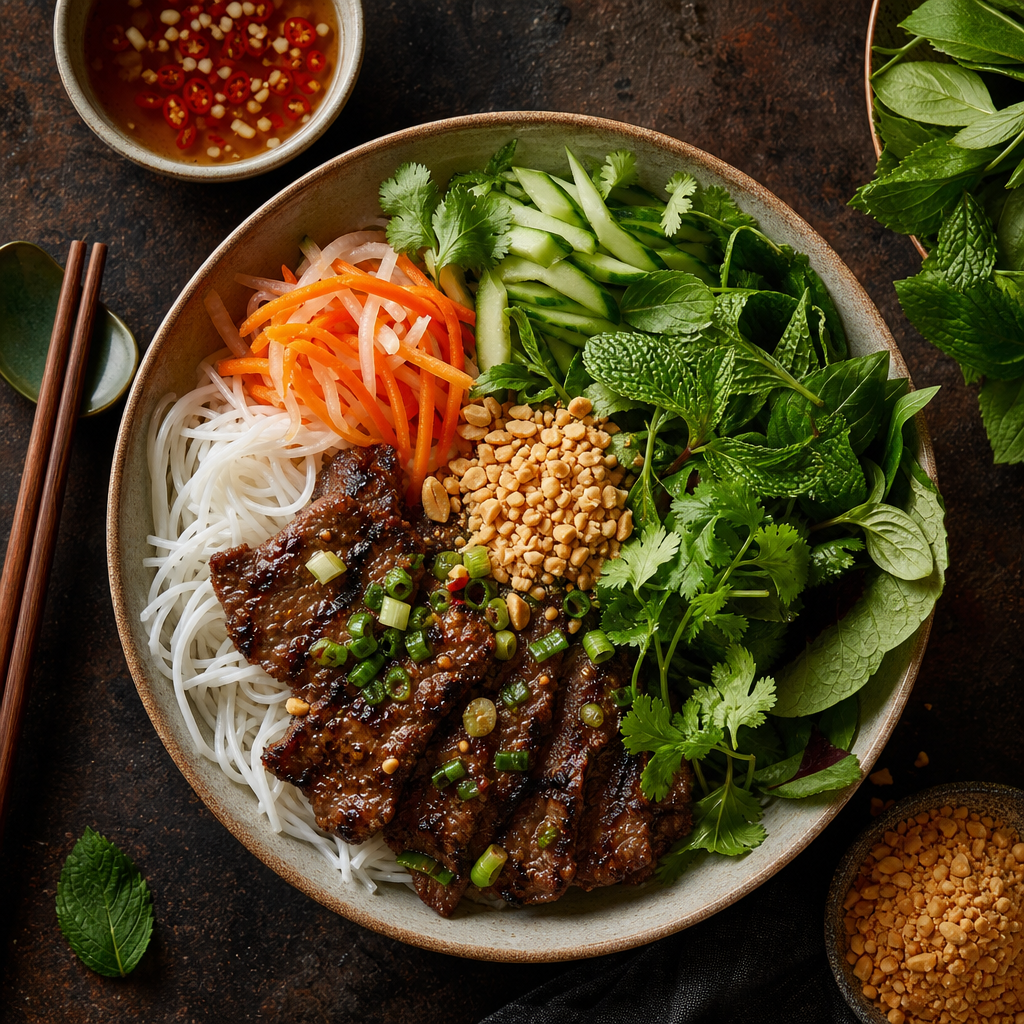
Short answer: A Vietnamese vermicelli bowl (bún) is halal when its grilled meat is zabiha-sourced and the kitchen avoids cross-contamination. The noodles, herbs, pickles and peanuts are all plant-based, and the nuoc cham dressing is built on fish sauce, which mainstream scholarship considers permissible. Because bún has no shared stockpot, it is actually one of the easiest Vietnamese dishes to serve halal.
Pho gets the attention, but regulars at Vietnamese restaurants know the vermicelli bowl is the workhorse of the menu — cold rice noodles under grilled lemongrass meat, a tangle of herbs, pickled carrot and daikon, crushed peanuts, and a bath of sweet-sour dressing. For halal diners it deserves special attention for a structural reason: unlike pho, nothing in a bún bowl comes from an all-day communal stockpot.
Is a vermicelli bowl halal?
Component by component, a bún bowl is remarkably clean from a halal standpoint. The only high-stakes item is the protein on top. If the restaurant grills zabiha beef or chicken — and doesn't share the grill with pork items without separation — the bowl is halal. Every other component is plant-based or low-concern. That makes bún a shorter checklist than almost anything else on a Vietnamese menu, including pho, where the broth adds a second sourcing question.
What's in a bún bowl?
| Component | What it is | Halal status |
|---|---|---|
| Bún noodles | Thin rice vermicelli — rice flour and water | Halal by composition |
| Grilled protein | Lemongrass beef, chicken, or (in non-halal shops) grilled pork | The key question — must be zabiha-sourced |
| Fresh herbs & vegetables | Lettuce, mint, cilantro, cucumber, bean sprouts | Halal |
| Pickles | Carrot and daikon in vinegar and sugar | Halal — vinegar is permissible |
| Crushed peanuts & fried shallots | Toppings | Halal — confirm frying oil isn't shared with pork items in strict cases |
| Nuoc cham | Fish sauce, lime, sugar, garlic, chili dressing | Halal per mainstream scholarship |
| Spring roll add-on | Often offered on top (fried or fresh) | Verify — fried rolls are frequently pork-filled in non-halal shops |
Are the vermicelli noodles halal?
Yes. Bún noodles are rice flour and water, extruded into thin strands and boiled. No animal products, no alcohol, no additives of concern — the same analysis as the flat banh pho noodles in soup. The strictest diners sometimes ask about shared blanching water in mixed kitchens, but the noodles themselves are halal by composition everywhere.
The proteins: where the halal question lives
The classic bún proteins are grilled lemongrass beef (bò nướng), grilled chicken (gà nướng), and — in non-halal restaurants — grilled pork (thịt nướng) and pork spring rolls. This is the entire halal question in one place:
- At a halal-friendly restaurant, the beef and chicken are zabiha-sourced and pork is simply absent from the menu — the ideal case.
- At a conventional restaurant, even choosing the beef bowl doesn't make it halal: the meat isn't zabiha, and it likely shares a grill with pork.
The marinade is worth one question in unfamiliar kitchens: lemongrass, garlic, sugar, fish sauce and oil is the classic base — halal — but some recipes add oyster sauce (fine for most) or, rarely, rice wine (ask if strict).
Is the nuoc cham dressing halal?
Nuoc cham is fish sauce diluted with lime juice, sugar, water, garlic and chili. Mainstream scholarship considers fish sauce permissible — it's a fermented fish product, not an intoxicant, with only the incidental ethanol traces found in all fermented foods. We cover the scholarship in detail in our fish sauce guide. Diners with stricter standards can ask for the bowl with a squeeze of lime instead.
Bún vs. pho: which is easier to verify?
Bún, and it isn't close. Pho requires halal meat and a halal broth from a communal stockpot — two supply chains. Bún requires only the grilled protein to be halal; there is no broth. This is why, at a mixed-menu restaurant making genuine halal efforts, the vermicelli bowl is often the most confidently halal order on the menu. At a verified halal-friendly kitchen, both are equally safe — and the choice becomes hot soup versus cold noodles, which in July answers itself.
Ordering a halal bún bowl in Ottawa
Ottawa's verified halal-friendly Vietnamese kitchen is in the ByWard Market, and its vermicelli bowls with grilled lemongrass beef are exactly the dish this article describes — see the vermicelli and grilled-meat menu at this ByWard Market Vietnamese spot, and our directory listing for its documented halal-friendly status, address and hours.
If you're building a full Vietnamese meal, the natural pairing is a bún bowl alongside fresh rolls to start, or the halal-friendly lemongrass beef bánh mì for whoever at the table wants a sandwich instead. The wider context — every verified option, cuisine by cuisine — lives in our halal Vietnamese guide and the halal-friendly collection. As always, per our editorial standards: sourcing can change, so diners with strict requirements should confirm directly with the restaurant.